Sep 8, 2026Buying Guides
How to Choose a Paper Cut Light Box: Layers, LED & Frames Explained
A buyer's guide to sourcing layered paper cut light boxes: how to judge layer depth, paper quality, LED specs, frames, and market compliance before you order.
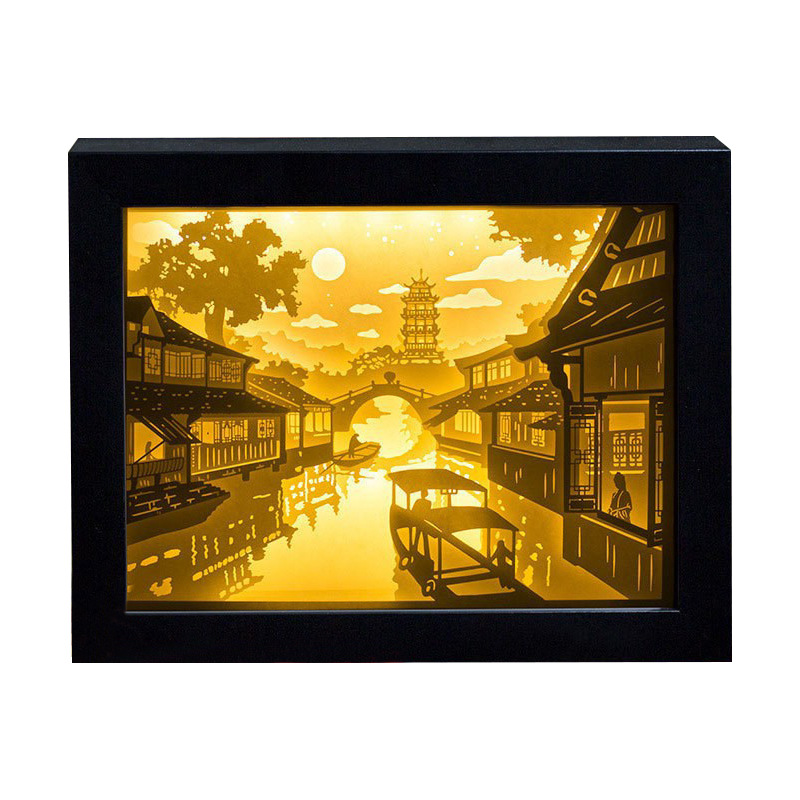
If you are sourcing a paper cut light box for wholesale or retail, the product photos all look similar. The differences that decide whether customers return for a second order are hidden inside the frame: layer count, paper quality, LED specification, and build quality. This guide explains how to evaluate each one before you commit to a purchase order.
The short answer: judge a layered paper light box on four things. First, the number and spacing of the paper layers, which create the depth effect. Second, the paper itself, which determines whether the piece yellows within a year. Third, the LED and power setup, which controls brightness, color tone, and safety. Fourth, the frame, which protects the product in transit and on the shelf. Get these four right, then confirm compliance documents for your destination market.
Layer Count and Depth: Where the Effect Comes From
A paper cut light box works by stacking cut silhouette sheets in front of a backlight. Each sheet blocks progressively more light, so the eye reads the stack as a three-dimensional scene. The depth effect is a function of layer count and spacing, not of the LED brightness.
Most quality boxes on the market use 6 to 8 layers, with 7 layers being the most common configuration. Layer spacing typically runs 2 to 5 mm. Fewer layers flatten the scene and make the product look cheap next to competitors; excessive spacing makes the frame bulky without improving the effect. When comparing supplier samples, look at the transition between layers in a lit scene: the gradation from foreground silhouette to the brightest background should be smooth, with no visible gaps at the frame edges.
Also check that the cutting is clean at every depth. Laser or precision die cutting should leave no scorching on the paper edges and no misalignment between layers, because misalignment is the defect most visible to end customers when the box is switched on.
Paper Quality and Yellowing: The Return-Rate Killer
Paper is the component most often overlooked by first-time buyers, and it is the one that drives complaints. Ordinary paper contains lignin and acids that break down under light and heat, turning a once-white silhouette yellow or brittle. For a backlit product that runs warm, this happens faster than in ordinary paper crafts.
Ask suppliers for the paper weight and type in writing. A workable range for silhouette layers is 160 to 250 gsm cardstock: light enough to transmit the backlight evenly, stiff enough to hold the cut shape. More importantly, specify acid-free paper, which resists yellowing over the product's life. This is a standard specification in the trade, so a supplier who cannot answer the question clearly is a warning sign. For European buyers in particular, acid-free stock also supports a general eco-positioning that matters to gift retail customers.
One practical test: request a sample, run it lit for a week, and compare the paper against an unopened spare. Any visible shift toward cream indicates non-acid-free stock.
LED Specifications and Power: Brightness, Tone, and Safety
The LED strip determines whether the box reads as a warm decorative piece or a harsh fluorescent rectangle. The standard configuration for this category is warm white at 2700K, built on SMD2835 strips, running on DC 5V. This combination gives an even glow across the back panel without hot spots behind the cutouts.
For LED lifetime, the industry benchmark you should ask about is 25,000 to 50,000 hours. Treat supplier claims at the top of that range as requiring supporting test documentation rather than taking them at face value. A box lit three hours per evening should serve for years either way, but the specification tells you how the supplier sources its strips.
Power options are typically USB or an AA battery box. USB suits permanent display and marketplace listings that emphasize plug-in convenience; battery operation suits gifting, since the box works immediately anywhere. Confirm which option, or both, your supplier supports, and confirm the plug type for your market. Low-voltage DC 5V designs are inherently safer to ship and certify than mains-powered alternatives, which is one reason this category has grown among online sellers.
Frame Construction and Size: Protection and Shelf Appeal
The frame holds layer spacing constant and protects the stack. Common materials are solid wood, MDF, or ABS. Wood frames photograph well and support a premium gifting position; ABS keeps weight and shipping damage risk lower. Match the material to your channel: heavy wood suits boutique retail, lighter frames suit e-commerce fulfillment where every gram affects shipping cost.
Typical finished sizes in the category run from about 19.7 x 14.5 cm up to 20 x 20 cm, with A4 formats also common. These sizes fit standard gift shelving and keep dimensional-weight shipping manageable. Whatever size you choose, confirm the export packaging: a color box with fitted inner lining, corner protection, foam padding, and a double-wall corrugated outer carton is the standard that keeps breakage claims low for a glass-fronted, layered paper product.
Compliance: Confirm Documents for Your Destination Market
A paper cut light box is an electrical product once the LED and power supply are included, so market entry rules apply. Because certification requirements differ by destination and by power configuration, always confirm the matching configuration and documents for your destination market before ordering: EU: CE (LVD + EMC) and RoHS; US: FCC; UK: UKCA. If your range includes children-oriented designs, additional toy-safety documentation may apply, and USB-charging variants sold through marketplaces are commonly asked for supporting test reports. Raise this with your supplier at the quotation stage, not after the goods arrive.
A Pre-Order Checklist for Wholesale Buyers
Use this list when comparing a paper cut light box manufacturer or quote:
1. Layer count and spacing: confirm 6-8 layers with 2-5 mm spacing, and check sample photos for alignment.
2. Paper: written specification of 160-250 gsm, acid-free, with yellowing resistance.
3. LED: warm white 2700K on SMD2835 strips, DC 5V, and a stated lifetime in the 25,000-50,000 hour range.
4. Power: USB, battery box, or both, with the correct plug type for your market.
5. Frame: material matched to your channel, in standard sizes such as 19.7 x 14.5 cm, 20 x 20 cm, and A4.
6. Packaging: color box with inner lining, corner protection, foam, and double-wall corrugated outer carton.
7. Compliance: written confirmation of the configuration and documents for your destination market (EU: CE/RoHS; US: FCC; UK: UKCA).
8. Customization: artwork adaptation, frame finish, and minimum order terms in writing. Flexible suppliers can support custom paper cut light box projects from a single piece, which lets you test a design before scaling.
Conclusion: Judge the Build, Then Confirm the Paperwork
Wholesale buyers who source layered paper light boxes successfully do two things: they evaluate the physical build against the four criteria above, and they settle compliance and packaging details before the deposit, not after. When comparing quotes for paper cut light box wholesale orders, send every supplier the same specification list so the differences you see are real differences in quality.
Aperlaser2 is a factory-direct paper cut light box manufacturer based in Shenzhen with a 50-person team, MOQ from 1 piece, custom orders delivered in about 7 days, and 24-hour inquiry response. Send us your target design or reference photo and receive a quote and specification sheet to compare against your other suppliers.
Written by the Aperlaser2 team, direct manufacturer of 3D memo pads and paper cut light boxes in Shenzhen. Last updated: 2026-09-08.